
Tineola bisselliella
Common Clothes Moth
Common Clothes Moth
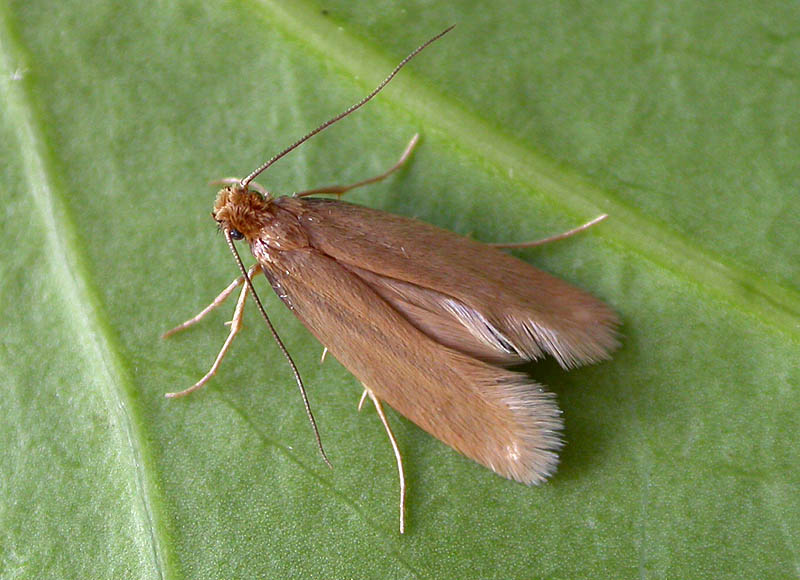
Tineola bisselliella
Common Clothes Moth
12.026 BF236
Wingspan 9-16 mm.
Formerly far commoner than it is these days, this moth inhabits houses, and was at one time a pest species. Its decline is probably due to the increase in use of man-made fibres and the much drier atmosphere created by central heating.
The larva, as its vernacular name suggests, feeds on woollen clothing, upholstery and carpets, as well as other animal-based material, such as hair or fur. It lives in a silken tube, and when gregarious this can develop into a dense matting.
The moths are more or less continuously brooded except during the winter months.
Formerly far commoner than it is these days, this moth inhabits houses, and was at one time a pest species. Its decline is probably due to the increase in use of man-made fibres and the much drier atmosphere created by central heating.
The larva, as its vernacular name suggests, feeds on woollen clothing, upholstery and carpets, as well as other animal-based material, such as hair or fur. It lives in a silken tube, and when gregarious this can develop into a dense matting.
The moths are more or less continuously brooded except during the winter months.
Flight period
| Month | Records |
|---|---|
| January | 3 |
| February | 2 |
| March | 5 |
| April | 15 |
| May | 20 |
| June | 31 |
| July | 35 |
| August | 21 |
| September | 15 |
| October | 2 |
| November | 2 |
| December | 5 |